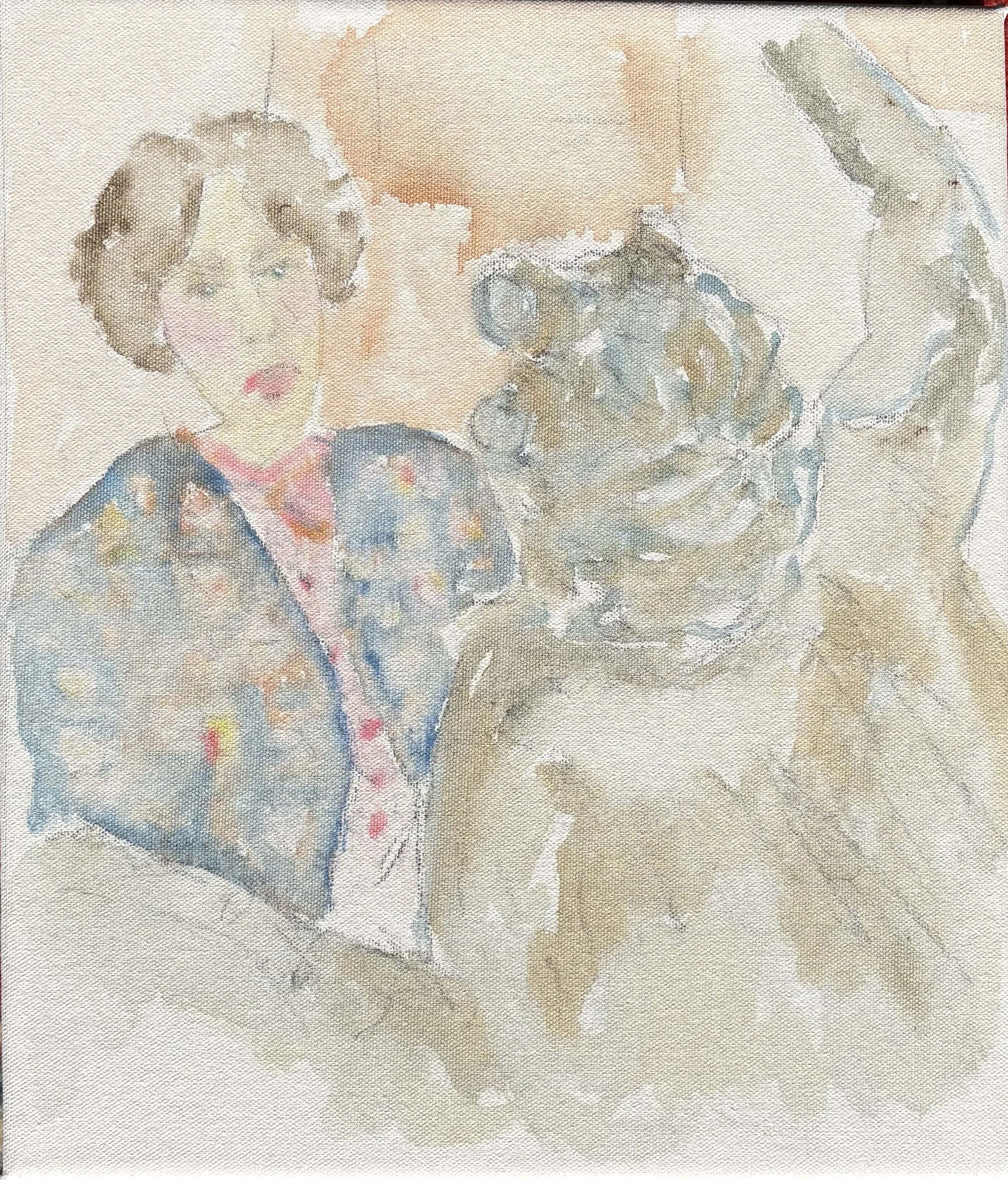
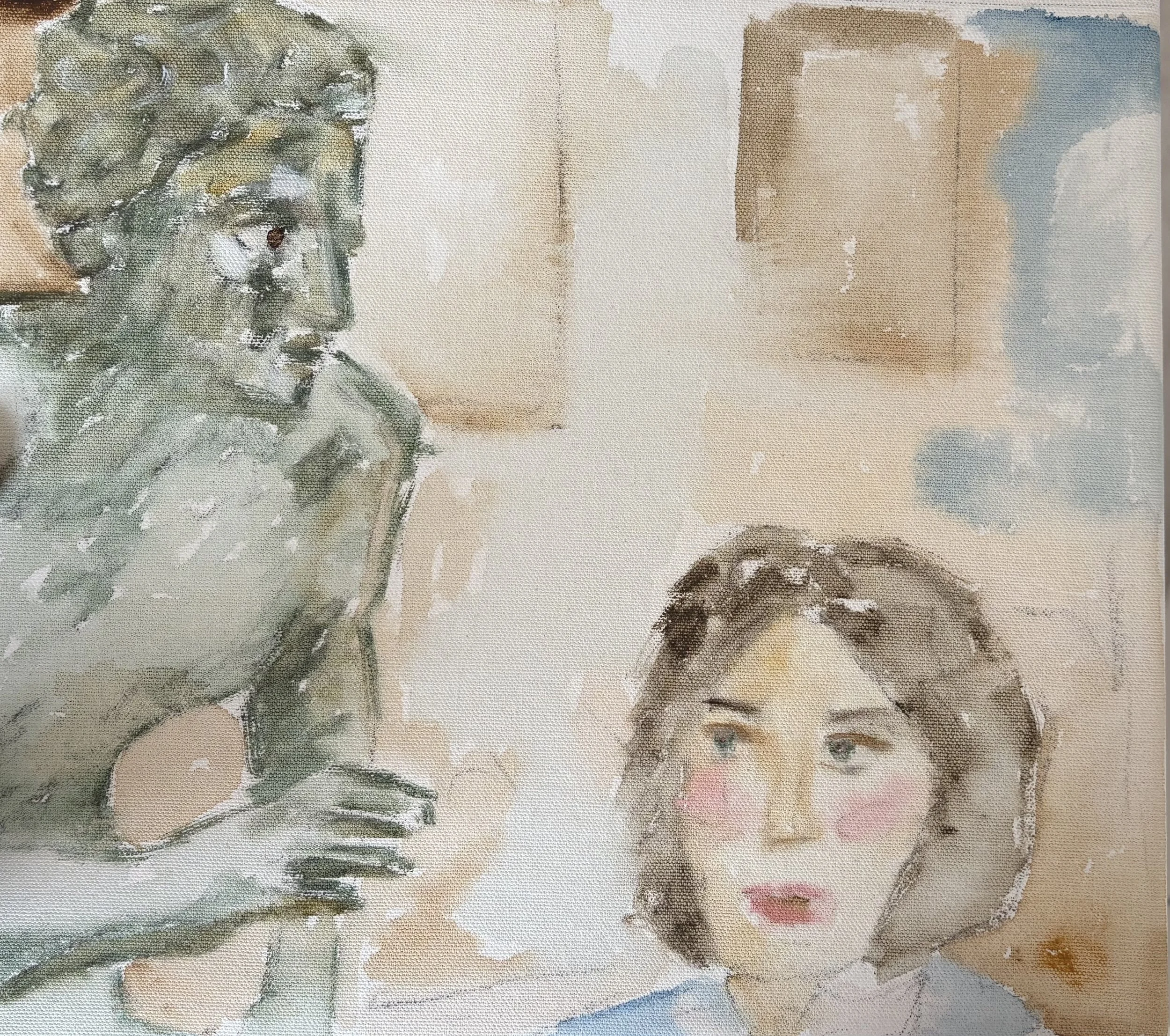
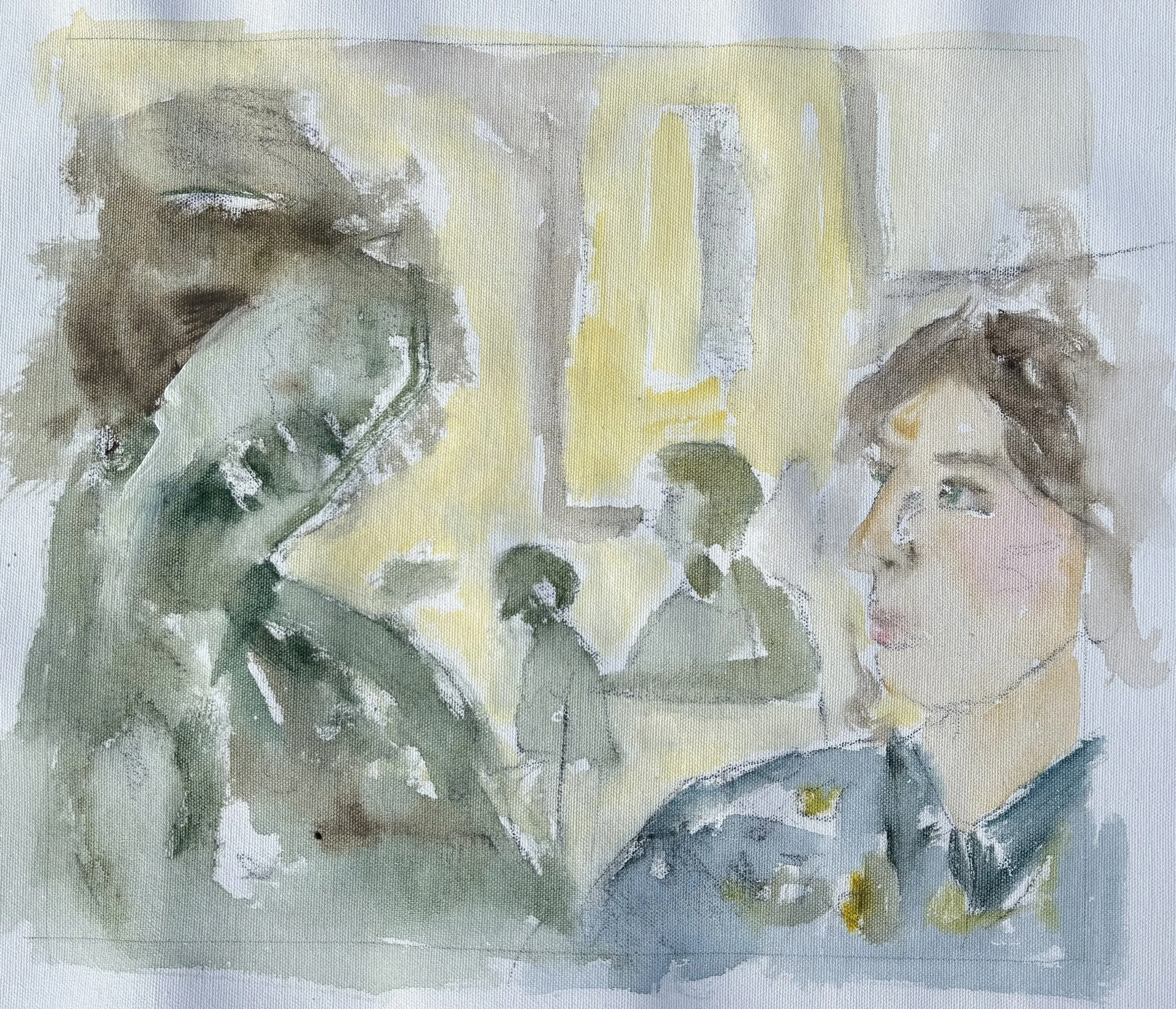
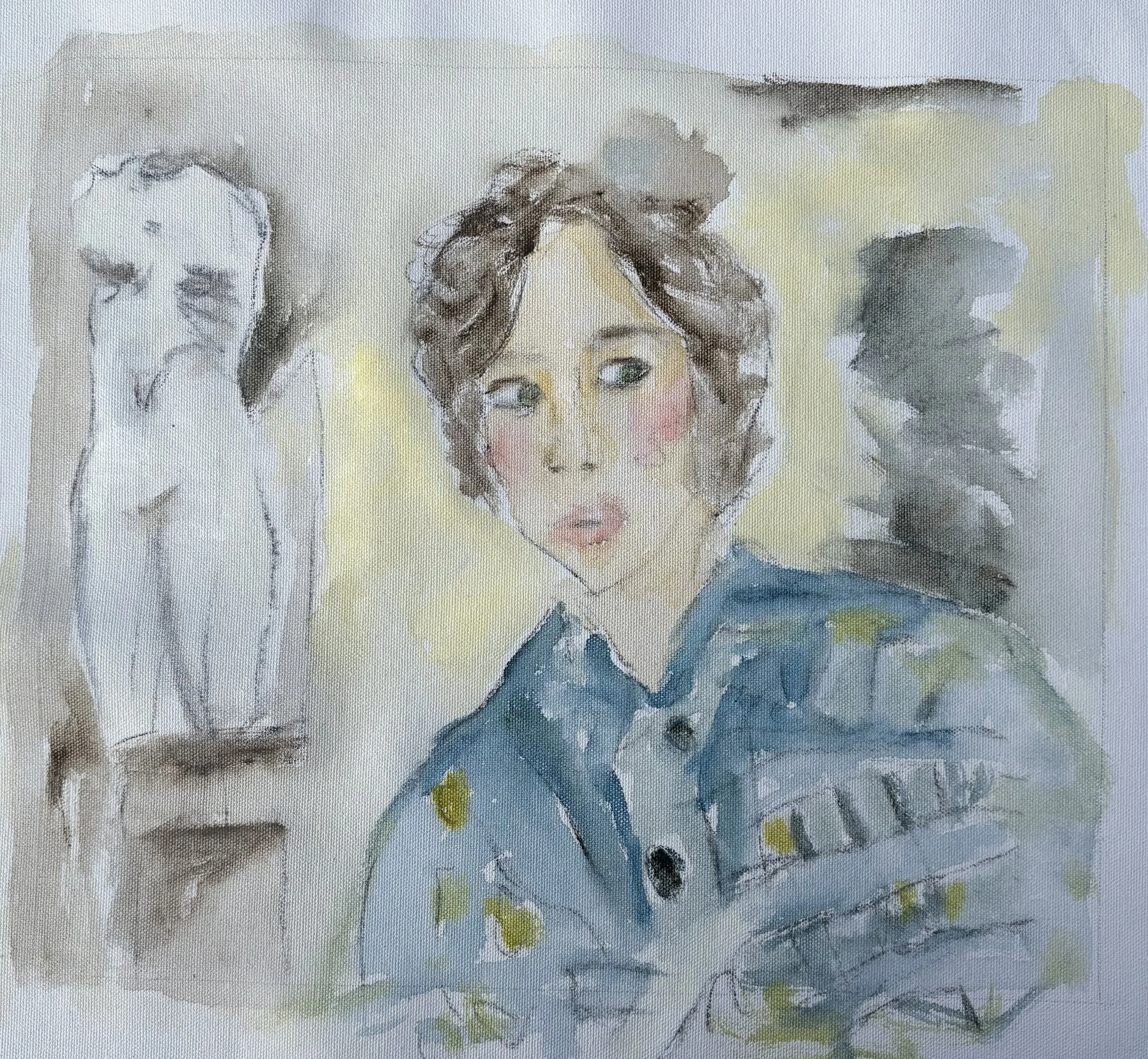
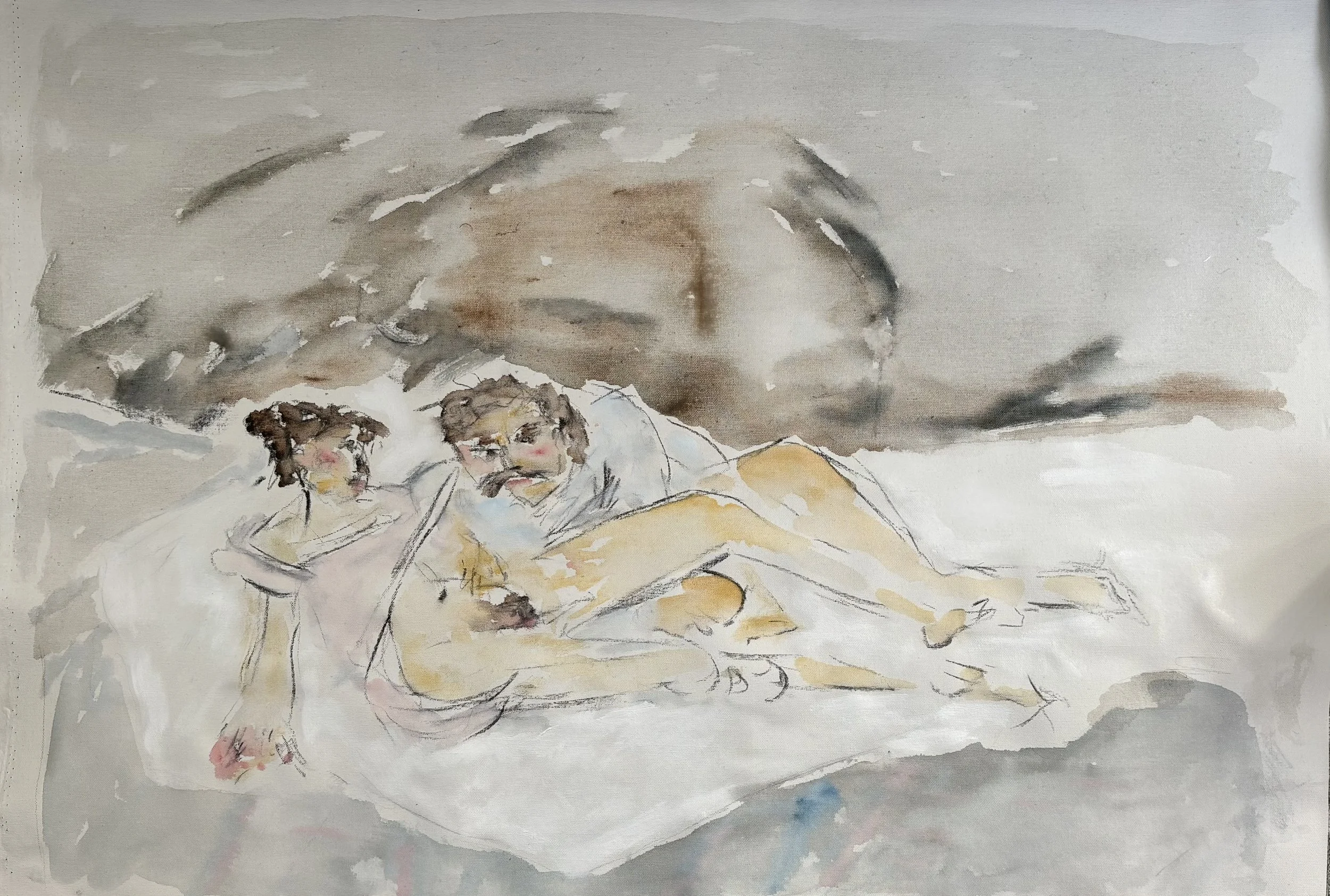
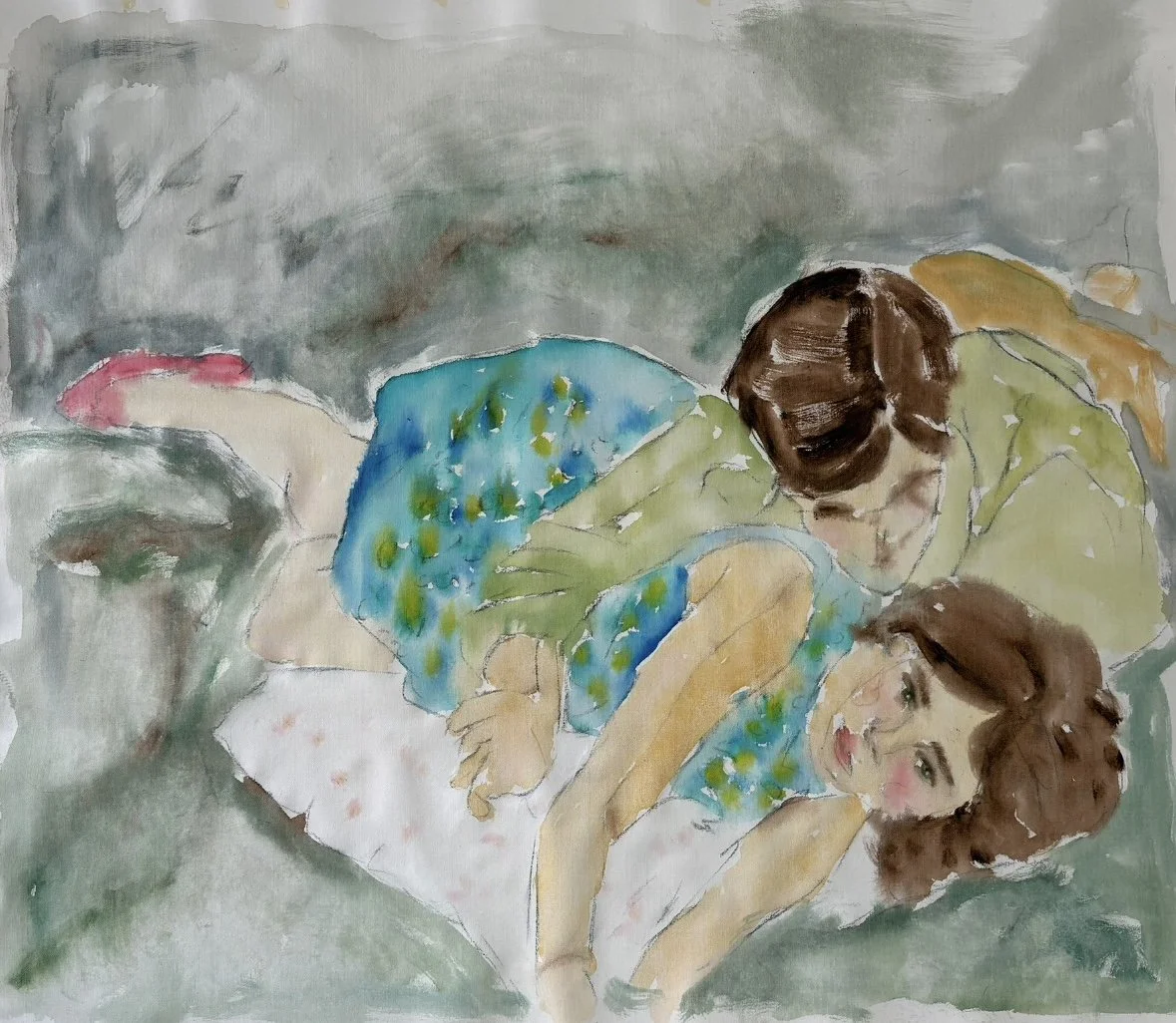
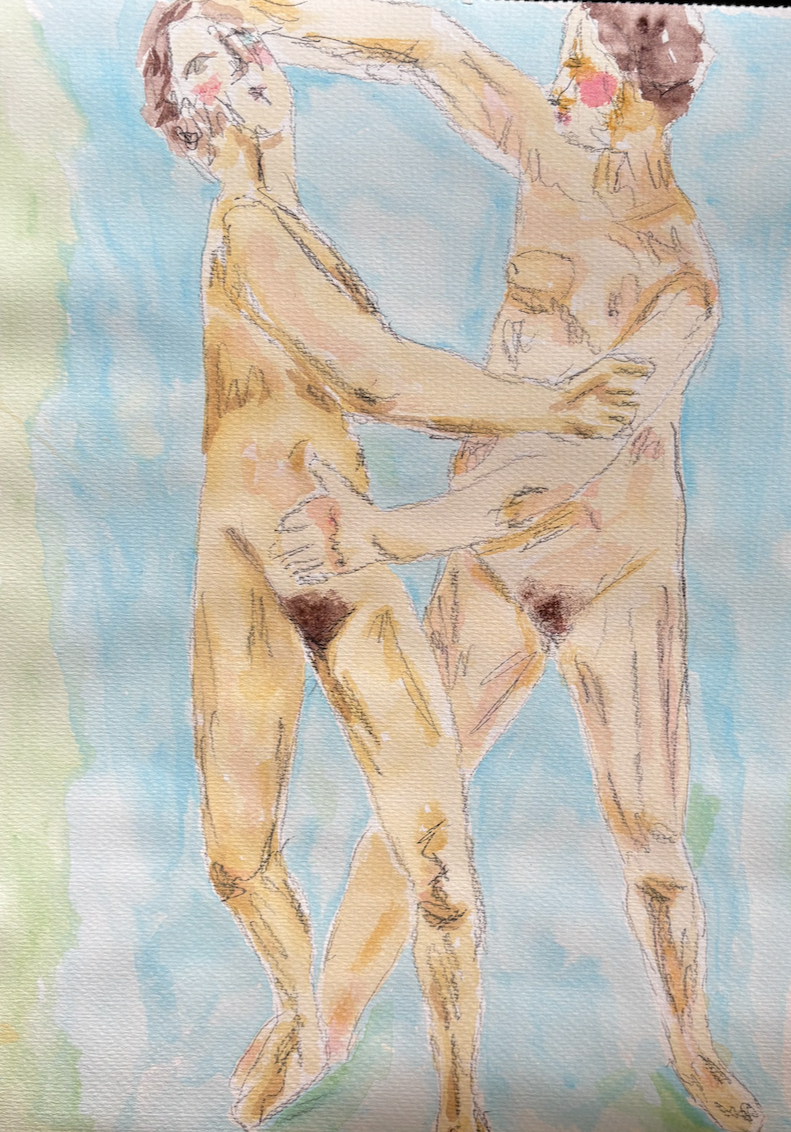
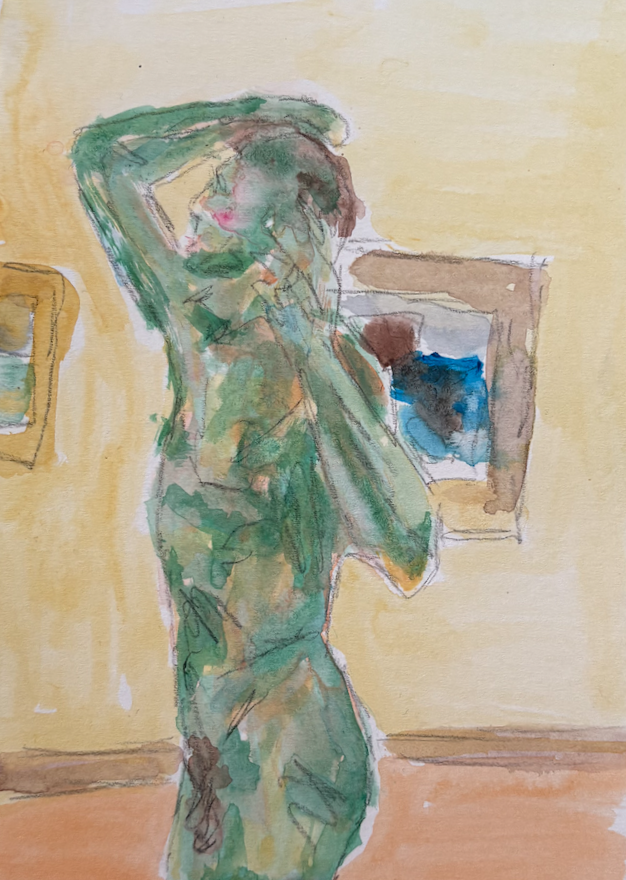
Mia’s current research engages with sculpture from Greek and Roman antiquity, reinterpreting classic forms to inform contemporary depictions of desire. Mia looks at how sculptural objects become sites of emotional projection, desire, memory, and identification. Drawing on classical mythology, art history, and film, she examines the unique relationship between viewer and sculpture, exploring how inanimate objects can acquire a powerful sense of presence.
This project investigates sculpture's capacity to evoke intimacy, attachment, and empathy, asking how viewers project emotional and psychological life onto sculptural forms. Rather than focusing solely on representation, the project considers sculpture as an active participant in meaning-making: an object that can appear animate, responsive, or emotionally charged despite its material stillness.
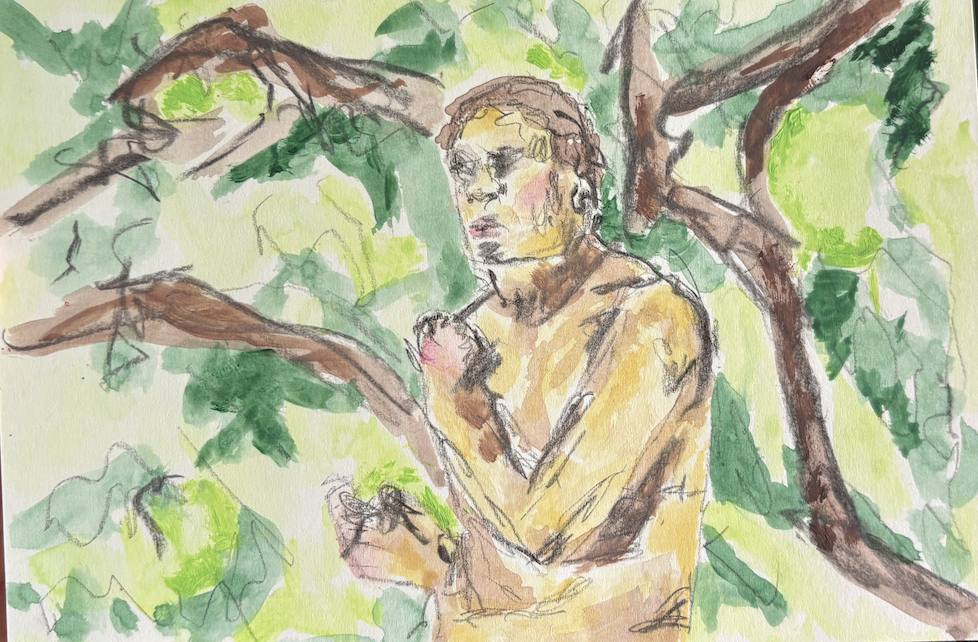
Mia’s self-portrait explores the symbolism of sexuality and desire in cinema through still life and self-portraiture. Inspired by Agnès Varda’s Le Bonheur (1965), a film that examines fidelity and happiness through an exaggerated abundance of flowers, the work draws on Varda’s lush yet unsettling visual language. In Le Bonheur, flowers become so saturated and excessive that they begin to mock beauty, masking betrayal beneath idyllic imagery.
Mia inserts herself into stills from the film, disrupting its pastoral veneer. By replacing the audience’s communal gaze with her own returned stare, she shifts the dynamic of spectatorship into a self-aware, voyeuristic exchange. This series considers floral imagery as a metaphor for sexuality, desire, and betrayal. Through still life and self-portraiture, flowers become both seductive and accusatory, questioning who performs happiness and who carries the consequences of desire


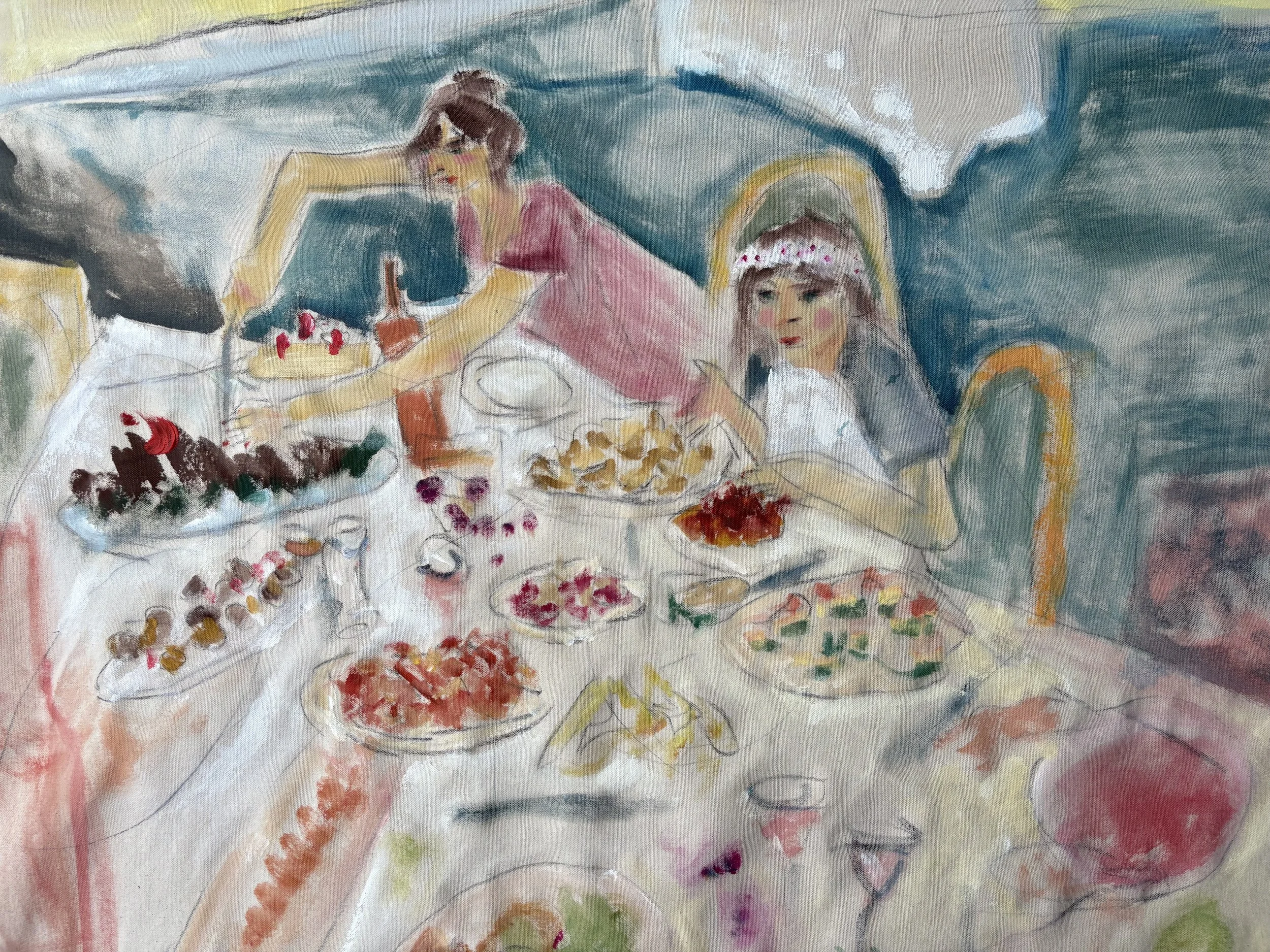
Starved and Salacious combines food imagery and self-portraiture to explore the symbolism of sexuality and desire in cinema. Drawing from histories of still life and food symbolism, the project examines how metaphors convey concepts of sexuality, gender, and sexism, offering a nuanced perspective on their depiction in cinema translated into painting.
At a time when symbolism and metaphor are able to orchestrate societies perception of sexuality and desire, through painting this project aimed to analyse the role of food as a symbol in cinema, providing a nuanced approach to the way we use metaphors.


